

Fishing Port
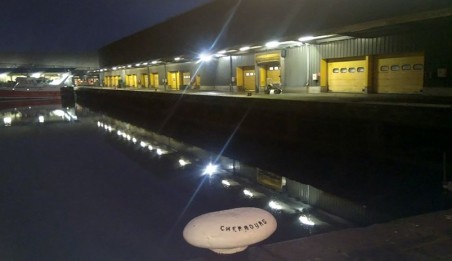
It benefits from a strategic geographical location that enables diverse and sustained fishing activity, with operations concentrated on offshore and coastal fishing.
The fishing port of Cherbourg-en-Cotentin is a key hub for the fishing industry.
It hosts a number of seafood processing companies, allowing diversification into activities complementary to fishing.
A resizing of the Fish Market is currently under study.
Main activities of the Fishing Port
The Fish Market provides all services related to sales operations:
- storage (in cold rooms or tanks)
- collection of seafood products along the Cotentin coastline
- sorting by species and according to weight, size, and quality standards defined by European, French, and regional regulations for market placement
- weighing and recording of products
- icing of products
- product traceability
- online display of lots (allowing buyers to view products offered for sale)
- computerized auction sales with the possibility to purchase on-site or remotely
- contract sales (or private agreements)
- delivery
- maintenance of facilities and equipment required for marketing
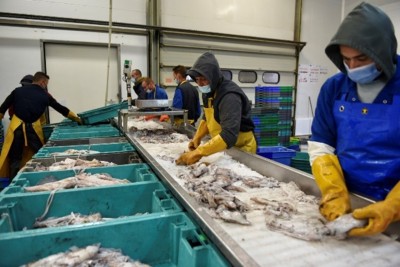
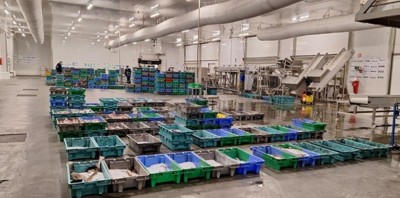
The Fish Market is also an essential and key player in the fishing sector through:
- Its role as a central link in the supply chain
- Its transparency, fairness, and independence towards stakeholders
- Its mandatory weighing registration function
- Its status as a key contact for professional bodies, local authorities, and state services (CRPMEM, OPN, NFM, UMF, DDTM, DDPP, Customs, etc.)
- Its professional expertise (training for Maritime High School, ULAM, French Navy, etc.)
- Its involvement in national control plans (fisheries observatory)
Additional activities
Collection of seafood products
The Fishing Port has been involved for several years in managing Landing Logistics Centres (CLD) in order to centralize Cotentin landings into a single, central marketplace and thus offer buyers a diversified range of coastal products in addition to offshore catches. It therefore plays a coordinating role within the sector.
The Fish Market has managed the CLD of Saint-Vaast-la-Hougue since 2015.
It also organizes collection rounds for seafood products at the CLD of Barneville-Carteret, upon fishermen’s request, and can collect products landed at advanced bases (Roscoff, Fécamp, Dieppe, Granville, etc.) for its clients.
Storage in tanks or cold rooms
The Fish Market offers its clients storage facilities for their products:
A tank line, consisting of 4 basins, is available for rental
A refrigerated storage room (positive cold) is also available to clients
Handling and recording of landed products
In addition to marketing, the Fishing Port offers various services to its clients:
- Handling of products
- Weighing
- Recording via interactive weighing terminal to comply with mandatory landing weighing requirements
- Storage
- Loading of transport vehicles
Facilities
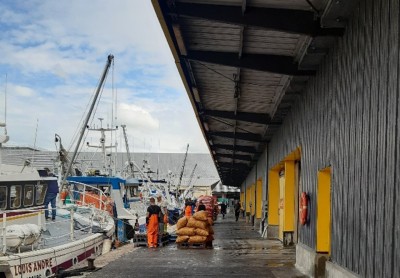
Landing quay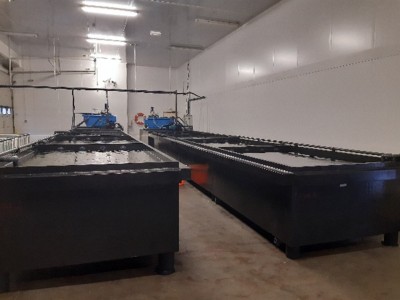
Tanks
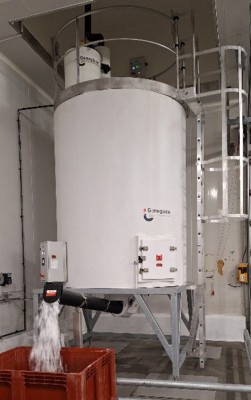
Ice silos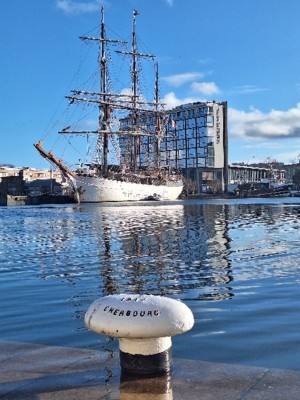
Fishing pontoons
Clients/users of the Fishing Port
- Producers (fishermen), divided into two main types of fishing:
- Offshore fishing, representing 70% of Fish Market landings
- Coastal fishing, representing 30% of Fish Market landings - Buyers:
They are located throughout France but mainly in the north-west quarter:
- Remote buyers: 90%
- Auction room buyers: 10%
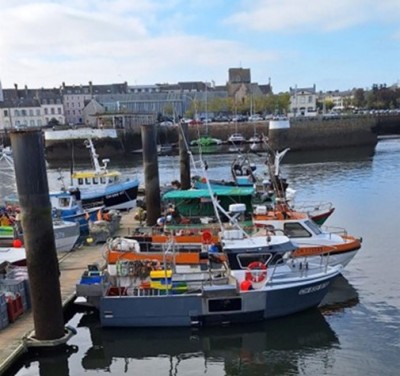
Coastal fishing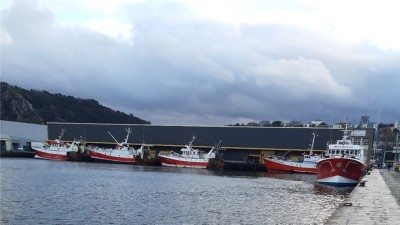
Offshore fishing
Waste management/environment
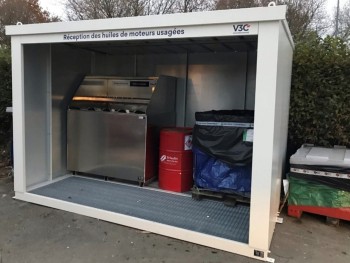
- For used oils: 3 collection points. One in the outer harbour at the foot of the fishing pontoon, the second on Quai de l’Entrepôt, and the third in the Fish Market parking area
- For plastic and household waste: “general waste” containers are available along all quays and in the Fish Market parking area
- For scrap metal waste: 2 designated drop-off areas, one in front of the outer harbour fishing pontoon and the other in the Fish Market parking area
- 2 skips are also available to fishermen: 1 wood skip and 1 net skip
Special attention is required from industry professionals regarding waste management. The environment is a major issue for the sector; the Fishing Port aims to work closely with its users to improve the handling of all waste.